

GMP related knowledge
2026-05-15
1. The air entering the clean room (zone) must be purified, and its degree of cleanliness must be determined in accordance with the requirements of the production process. The number of microorganisms and dust in the air of the clean room (zone) must be regularly monitored, and the results of the control must be recorded and archived.
2.Windows, ceilings, as well as connections between pipelines, ventilation openings, lamps and walls or ceilings in the clean room (area) must be hermetically sealed. The static pressure difference between adjacent rooms with different air cleanliness classes must be more than 10 Pa, and the static pressure difference between the clean room (zone) and the outside air must be more than 10 Pa; Differential pressure indicating devices must be installed.
3. When moving personnel and materials between clean rooms (areas) with different air cleanliness classes, measures must be taken to prevent cross-contamination.
Clean rooms (areas) must be disinfected regularly. The disinfectants used should not cause contamination of equipment, raw materials and finished products. Types of disinfectants should be changed periodically to prevent the emergence of resistant strains of microorganisms.
The relative humidity and temperature of the incoming air should be adjusted according to product requirements and to ensure human comfort.
Depending on the cleanliness level and product requirements, a certain pressure differential should be maintained in production areas to minimize the concentration of active and/or inactive particles in the cleanroom air and prevent cross-contamination.
Clean room (zone)
The room (zone) in which it is necessary to control the content of dust particles and microorganisms. Its architectural design, equipment and purpose are designed to reduce the penetration, generation and retention of sources of pollution in a given room (area). Parameters that determine the state of the air: temperature, humidity, content of dust particles, microorganisms.
Glossary:
Particles: Solid and liquid substances typically ranging in size from 0.001-1000 microns.
Floating microorganisms: active microbiological particles suspended in the air, collected using a special sampler; when using a special nutrient medium and under suitable growth conditions, they can multiply to the number of visible colonies; concentration is expressed in units/m³ or units/l.
Sedimentary microorganisms: living microbiological particles collected using plates of a certain size, which have been kept in a clean room (area) for a certain time and multiply on a special nutrient medium under suitable conditions to a visible number of colonies. Concentration is expressed in units (diameter 90 mm, 0.5 h).
Basic concepts in the field of air conditioning systems:
Air conditioning is a technology that helps maintain indoor parameters such as temperature, relative humidity, noise level, pressure and cleanliness within certain limits.
As a rule, humidity and temperature in a room are inversely related: the lower the temperature, the higher the relative humidity.
Relative Humidity: The ratio of the density of water vapor in air to the density of saturated water vapor at the same temperature, usually expressed as a percentage. (That is, this is the ratio of actual air humidity to saturation humidity at the same temperature. The degree of saturation of air with water in the same volume varies depending on the temperature. The higher the temperature, the higher the degree of saturation of air with water.)
Absolute humidity: the ratio of the mass of water vapor in the air to the total volume of moist air (the mass of water vapor contained in a unit volume of air is called absolute humidity). Its unit of measurement is usually grams per cubic meter.
Dew Point Temperature: The temperature at which water vapor in the air begins to condense. At 100% relative humidity, the ambient humidity corresponds to the dew point temperature. The lower the dew point temperature is than the ambient temperature, the less likely it is for condensation to form, which means the air is drier. The dew point does not depend on temperature, but does depend on pressure.
Differences between cleansing conditioners and regular conditioners:
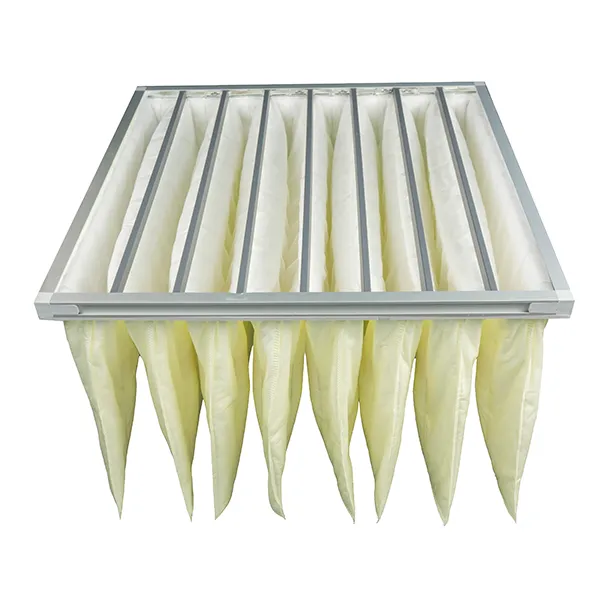
Air filtration: Regular air conditioners use one or two stage filtration, while purifying air conditioners use three or four stages;
Laminar flow: Conventional air conditioners have a more turbulent flow and their purpose is to regulate temperature and humidity, while purifying air conditioners limit the spread of dust particles;
External pressure drop control: Clean rooms have pressure drop requirements while conventional air conditioners do not have such requirements;
In terms of air flow and energy consumption: the air exchange rate in conventional air conditioners is less than 10 times per hour, and in air purifying air conditioners it is more than 12 times per hour.
Temperature, humidity and pressure drop control
Temperature and Humidity Control
Temperature Control: According to the Standard Operating Procedure (SOP), the temperature should be maintained between 18-26°C under normal conditions. In areas with increased heat generation, such as the bottle washing room and the room for preparing diluted solutions, it is recommended to maintain the temperature no higher than 31 °C.
If the inspection reveals that the temperature exceeds 26°C, the cold water flow valve in the cooling section must be adjusted to increase the cold water flow to lower the temperature. If the room temperature exceeds 26°C in winter, close the steam valve and increase the opening of the supply air valve, using the supply air for cooling. If during the inspection it is found that the temperature is below 18 °C, the steam valve in the heating section should be opened to the appropriate extent.
According to the SOP, under normal conditions the standard for humidity control is 45-65%; In areas with high heat generation, such as the bottle washing room and the solution preparation room, it is recommended to maintain the humidity no higher than 75%.
If the test shows that the relative humidity is below 45%, turn on the humidification section to increase the humidity.
If the test shows that the relative humidity is approaching 65%, open the primary cooler to drain. Since there is a certain temperature difference between the air and the cooler, some of the water vapor contained in the air is released on the surface of the cooler and is removed through the drain pipe. Then open the heating valve to increase the air temperature under GMP requirements, which will reduce the relative humidity. Since the temperature of steam heating is usually difficult to control, temperature control is carried out using a secondary cooler.
Cooler operating principle:
Chilled water is supplied to the cooler. By cooling the water, the surface temperature of the cooler remains low. When hot air containing a large amount of water vapor passes through the cooler, its temperature drops sharply, and water vapor is released on the surface of the cooler, forming condensation, which, under the influence of gravity and drainage partitions, flows into a pan and is discharged into the sewer. The air passing through the cooler becomes saturated in relative humidity due to the low temperature, and after heating in the steam heater it turns into air with a lower relative humidity at a certain temperature.
Differential pressure control
Pressure differential control is an extremely important element in air conditioning and air purification systems.
Only by regulating the pressure drop in the areas being cleaned and ensuring rational air flow can compliance with cleaning and process requirements be achieved. For example, in a clean production room it is necessary to maintain a certain positive pressure so that unpurified air from outside does not enter the cleaning zone, which ensures the required level of cleanliness; In addition, by regulating the pressure drop in different cleaning zones, separation of cleaning zones is achieved. According to GMP requirements, the static pressure difference between adjacent rooms with different levels of air cleanliness must be more than 10 Pa, and the static pressure difference between the clean room (zone) and the outside air must be more than 10 Pa; in this case, devices must be installed that display the pressure difference.
In areas with the same level of cleanliness, relative negative pressure is maintained in areas with high dust production; in areas with the same level of cleanliness, relative positive pressure is maintained in key areas. A certain pressure differential must be maintained between the cleanroom and the surrounding area, and whether a positive or negative pressure differential should be maintained should be determined according to the requirements of the manufacturing process.
In some areas of the clean area (for example, in the grinding room in a workshop for the production of solid dosage forms), dust is generated during operation, which, under the influence of turbulent air flow supplied from above, leads to contamination of the entire room. To prevent dust from polluting other rooms, such rooms are maintained at a relative negative pressure relative to other rooms. In air conditioning and air purification systems in the air supply ducts, due to the accumulation of dust on the filters, a change in resistance occurs, which affects the flow rate of the supplied air and leads to pressure fluctuations in the room.
Pressure gauge:
In accordance with the cleanroom requirements set out in the National Guidelines for Verification of Drug Manufacturing in accordance with GMP, micromanometers with a range of 2000-60 Pa are usually used to measure the pressure drop in clean areas (rooms), and micromanometers with a range of 2000-125, 250, 500 Pa are usually used to check the pressure drop in filtration sections with low and medium efficiency filters.
If the pressure drop readings are below normal, you must first ensure that the pressure gauge is working properly, and then, provided that the required air exchange rate in the clean room is ensured, partially close the return air intake valve. If this does not help, partially open the air supply valve with a high efficiency filter. If the required performance is still not achieved, it is necessary to check whether the high-efficiency filter is clogged by measuring the air flow; If clogged, the filter should be replaced. If the differential pressure reading is too high, the supply air valve should be partially closed and the return air valve should be opened while maintaining the required air exchange rate in the clean room. If the differential pressure reading is significantly higher than normal, the high efficiency filter should be leak tested using a leak tester.
Important note: When adjusting differential pressure, it is necessary to constantly monitor the pressure differential in other cleanrooms (zones), since local adjustment of individual air intakes affects the distribution of air flow throughout the system, which in turn affects the pressure drop in other zones (rooms).
Validation of air purification and air conditioning systems
Basic principles for designing air purification systems
Correspondence of design capacity to production premises
Is the air conditioning system configuration appropriate for the product specifications? (degree of purification, cleaning ability, supply, return and exhaust air, etc.)
Is a reverse air intake system suitable? Air returned to the system must be filtered to prevent cross-contamination. In cases where the system is subject to potential contamination, the use of return air intake is limited or prohibited.
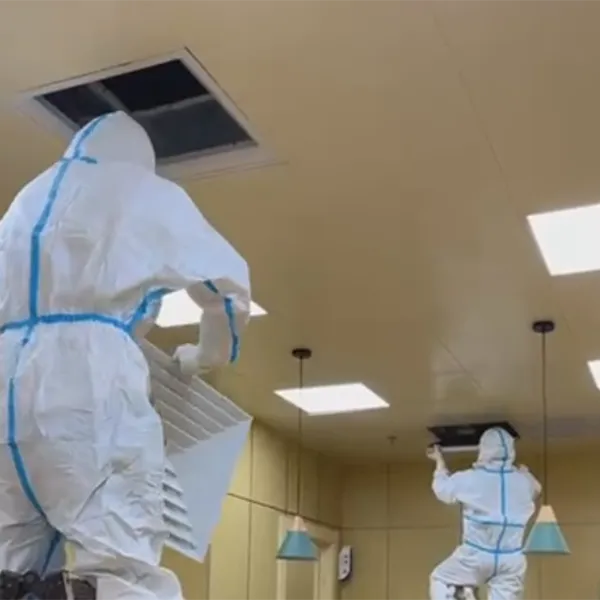
Installation of pressure drop indicators on low and medium efficiency filters. Without such control, the system becomes uncontrollable, leading to contamination problems.
Methods and measures for cleaning and disinfecting the system
Air conditioning system validation:
Typically involves four stages: pre-validation (or design validation, DQ), installation validation (IQ), operational validation (OQ) and performance validation (PQ).
Preliminary verification, that is, verification of the design, usually means checking the applicability of the technical characteristics of the ordered equipment and selecting a supplier;
Installation verification basically means the various system checks carried out during the installation of the equipment, as well as the documentation of technical information;
Operational verification is performance testing carried out to confirm that equipment meets specified requirements;
The performance check is “3 periods of rest and 3 periods of operation”, as well as daily environmental monitoring throughout the year to confirm the stability of the equipment.
Reasons for reducing the pressure drop in the room
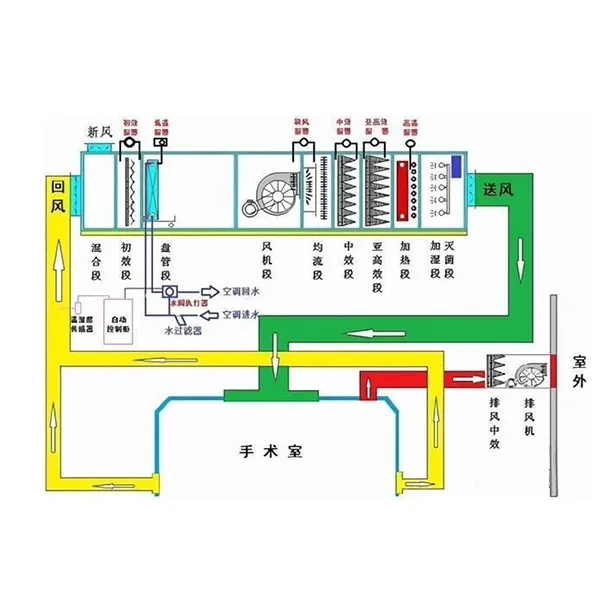
General design of purifying conditioner
1.Relative decrease in air conditioning system performance
1.1. Increase the opening degree of the supply air valve;
1.2. Increase the fan speed;
Reason: After replacing the filter, the resistance tends to gradually increase, so the above measures should be considered first.
1.3. Belt slippage: When the engine frequency remains constant, the actual fan speed decreases;
Cause: Installation of a new belt or wear of the belt due to prolonged use.
Measures: tighten the belt or replace it with a new one.
1.4. Air flow meter inaccuracy;
Cause: The air flow meter is misaligned or damaged, resulting in inaccurate measurements.
2.Increasing resistance in the air conditioning system
2.1. The fresh air filter is clogged with lint or other objects; often occurs between March and May;
2.2. Increasing the resistance of low, medium or high efficiency filters, up to doubling the original resistance;
2.3. The resistance of valves in rooms or control valves on a common supply air duct has increased;
3. Air leakage from premises or relative increase in reverse air exchange
3.1. Peeling of glue on the walls;
Measures: timely seal leaks with sealant;
3.2. Reduced door tightness;
Measures: adjust the door sealing strips or replace them with new ones;
3.3. Increasing the capacity of reverse air exchange valves in rooms;