

Requirements for the design and construction of clean production facilities for the food industry, as well as requirements for cleanliness control indicators
2026-04-05
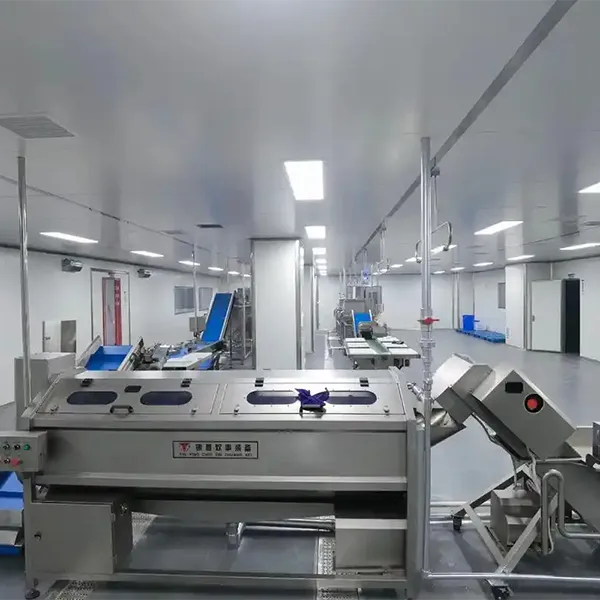
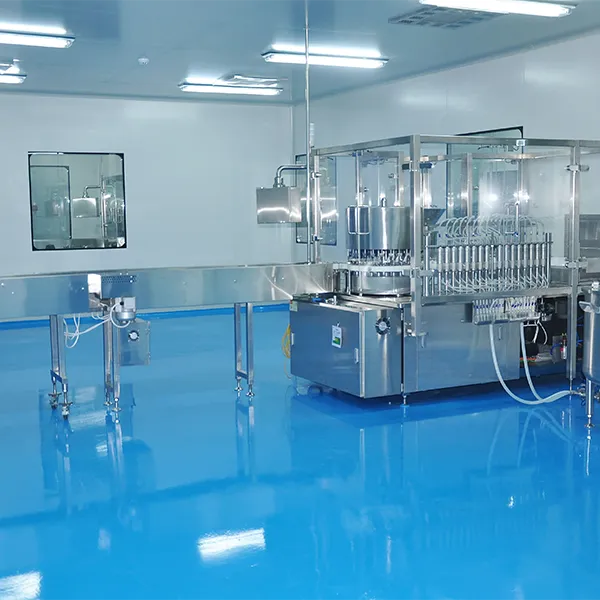
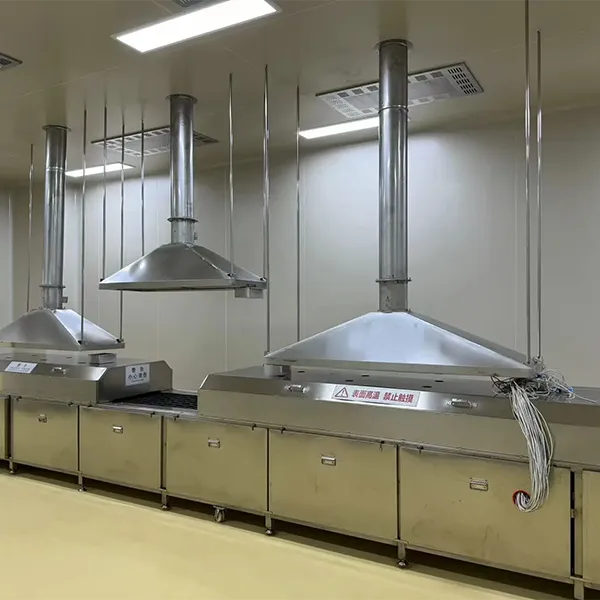
Clean production rooms for the food industry must meet the air purification standard class 100,000. The creation of clean production rooms in food factories can effectively reduce the risk of spoilage and mold on manufactured products, extend the shelf life of products and increase production efficiency.
01 What is a clean shop
A clean shop, also called a dust-free shop, clean room or dust-free room, is a specially designed room in which contaminants such as particulates, harmful gases and bacteria are removed from the air within a defined space and temperature, cleanliness, pressure, air flow speed and distribution, noise and vibration levels, lighting and static electricity are maintained within specified requirements. That is, regardless of changes in external conditions, the specified levels of cleanliness, temperature, humidity and pressure are always maintained in the room.
What is a Class 100,000 clean room? Simply put, this is a room in which the number of particles with a diameter of ≥0.5 microns per cubic meter of air does not exceed 3.52 million. The fewer particles in the air, the less dust and microorganisms, and the cleaner the air. In addition, a Class 100,000 cleanroom requires that the room be re-aired 15 to 19 times per hour and that the air purification time after a complete air change is no more than 40 minutes.
02 Separation of zones in clean shops of food enterprises
Clean shops of ordinary food enterprises can be divided into three zones: a general purpose zone, a high-cleanliness zone and a clean work zone.
1. General purpose area (non-clean area): storage areas for raw materials, finished products and tools, transport areas for finished products for packaging and other areas with low risk of contact of raw materials and finished products with the external environment, such as external packaging rooms, raw materials and auxiliary materials warehouses, packaging materials warehouses, external packaging workshops, finished product warehouses, etc.
2. Semi-clean area: The area with the second most stringent requirements, such as raw materials handling, packaging materials handling, packaging, buffer rooms (unpacking rooms), general production and processing areas, internal packaging areas for products not intended for immediate consumption, etc. - areas where finished products are processed but are not directly exposed to the external environment.
3.Clean work area: an area with the highest sanitary requirements, which can only be entered after disinfection and a change of clothing; for example: raw material and finished product processing areas where products are in the public domain, food cold processing areas, cold rooms for ready-to-eat products, storage areas for ready-to-eat products awaiting packaging, areas for internal packaging of ready-to-eat products, etc.
The site selection, design, layout, construction and renovation of food processing facilities with cleanrooms should be designed to prevent sources of contamination, cross-contamination, mixing of ingredients and errors as much as possible.
The plant area must be clean, and the flow of people and goods must be rationally organized.
Adequate access controls must be in place to prevent entry by unauthorized persons.
It is necessary to keep documentation of the completion of construction and installation work.
Buildings in which significant air pollution occurs during the production process should be constructed downwind of the prevailing wind direction in the plant area.
If it is impractical for production processes that have mutual influence to be located in the same building, effective isolation measures must be provided between the relevant production areas. For the production of fermented products, special fermentation workshops must be provided.
03 Requirements for clean production areas
Processes that require sterility but do not allow terminal sterilization, as well as processes that allow terminal sterilization but require sterile operations after sterilization, should be carried out in clean production areas.
The clean production area, which requires good sanitary conditions, should include areas for storing and processing perishable food products, semi-finished or finished products before final cooling or packaging; premises for pre-processing of raw materials that cannot be completely sterilized, as well as for bottling and molding of products; rooms in which products are located after final sterilization; area for preparing materials for inner packaging and premises for inner packaging; as well as processing and processing facilities intended for the production of food products, improving their properties or shelf life, and laboratories.
The clean production area must be rationally planned taking into account the technological process and the requirements for the cleanliness class of the corresponding premises. The location of production lines should not lead to the intersection of flows and interruption of the technological process.
The location of various workshops interconnected within the production area must meet the requirements for the product range and technological process; If necessary, measures to prevent cross-contamination should be provided, such as buffer rooms, the area of which should not be less than 3 square meters.
Pre-processing of raw materials should not be carried out in the same clean area as the production of finished products.
The production workshop should allocate an area and space appropriate to the production scale for the temporary storage of raw materials, intermediate products, products awaiting inspection and finished products, and cross-contamination, mixing and contamination should be strictly prevented.
The laboratory should be located separately, with adequate provisions for the removal of exhaust air and wastewater. If product testing requires clean air, clean work benches must be installed.
04 Requirements for air cleanliness control indicators in food industry areas
Food production conditions are an important factor affecting food safety. In this regard, a study and discussion of the requirements for air cleanliness control indicators in food processing areas was conducted on the Food Partner website.
Ⅰ.Cleanliness requirements stipulated by regulatory documents
Currently, the “Rules for the consideration of applications for licenses for the production of beverages and dairy products” contain clear requirements for clean air in clean production zones. The rules for considering applications for a license for the production of beverages (version 2017) establish that in cleanliness zones for bottling bottled water, the level of air cleanliness (in terms of the number of suspended particles and settling microorganisms) in a static state must reach class 10,000, and in the bottling area - class 100, or the overall level of cleanliness must reach class 1000; in clean areas for the production of carbohydrate-containing drinks, the frequency of air circulation should be at least 10 times per hour; for cleanliness zones in the production of solid drinks, different requirements for air purity are established depending on the characteristics of a particular type of solid drink and technological requirements;
Cleaning areas for other types of beverages must comply with relevant air cleanliness requirements; in a static state, air purity must reach at least a level of 100,000. In the case of the production of products not intended for direct consumption (for example, concentrates for the food industry (juices, purees), etc.), this requirement can be removed.
Rules for checking the licensing conditions of enterprises producing dairy products (version 2010) and “National Food Safety Standard. Good Manufacturing Practices for Dairy Products (GB12693) require that the total colony count in the air of dairy product purification areas should not exceed 30 CFU/cup. The regulations also require businesses to submit annual air cleanliness testing reports issued by accredited testing organizations.
In the “State food safety standard. General sanitary standards for food production" (GB 14881-2013) and in sanitary standards for the production of certain types of products, sampling points for monitoring the microbiological state of the environment in production premises, benchmarks and monitoring frequencies are in most cases presented in the form of annexes, which serves as guidance for food industry enterprises.
For example, in the National Food Safety Standard. Sanitary standards for the production of beverages" (GB 12695) it is recommended that the number of settling microorganisms (static) in the air of production areas of clean working areas (with the exception of areas for the production of solid drinks, concentrates for the food industry (juices, purees) and thick drinks) does not exceed 10 pcs./(φ90 mm·0.5 h).
Ⅱ. Requirements for control indicators for various cleanliness classes
From the information above, it can be seen that the air cleanliness requirements established in the standard mainly concern clean work areas. According to the guidance for the application of GB 14881: “Clean work areas typically include storage areas prior to final cooling or packaging of perishable foods, semi-finished or finished products, pre-processing areas, areas for pre-processing of raw materials, molding and filling of products not undergoing a sterilization process, areas where products are held after sterilization before entering the packaging area, and other food processing areas with a high risk of contamination.”
Beverage and dairy product inspection regulations and standards clearly require that indoor air quality indicators include particulates and microorganisms, and clean work areas must be regularly monitored to meet specified standards. Standards GB 12695 and GB 12693 require that the number of settling microorganisms be determined by the natural sedimentation method in accordance with standard GB/T 18204.3.
In the National Food Safety Standard. Good Manufacturing Practices for Specialty Health Care Products (GB 29923), as well as the Inspection Plan for the Production of Sports Nutritional Supplements published in Beijing, Jiasu and other regions, it is clearly stated that the amount of dust (suspended particles) is determined in accordance with GB/T 16292 under static conditions.
At present, the requirements for suspended particles and microorganisms set forth in the "Inspection Programs for the Production of Sports Nutritional Supplements" adopted in Beijing, Jiasu and other regions are consistent with the Class D purity level requirements established in "Sterile Drug Products", which is equivalent to the requirements of ISO Class 8 (Class 100,000). The standards for particulate matter (static) and microorganisms (dynamic) for various purity levels specified in Sterile Drug Products are given in Table 1.
Table 1. Standards for monitoring the content of suspended particles and microorganisms in sterile areas for medicines
The “Technical Standards and Rules for the Construction of Clean Rooms for the Food Industry” (GB 50687-2011) provides requirements for the content of microorganisms and suspended particles in clean rooms of various classes, with class III clean rooms meeting the requirements of ISO class 8. The requirements for the content of suspended particles and microorganisms in clean areas provided for by the standard are given in Table 2.
Table 2. Requirements for the content of suspended particles and microorganisms in clean areas
Note: The values of microorganism indicators indicated in the table are average; the maximum value at a single point should not exceed the average value by more than 2 times.
Facilities can set the parameters and frequency of monitoring of suspended particles and microorganisms for different levels of cleanliness in accordance with the provisions and requirements of the standards, as well as taking into account the recommendations set out in Sterile Medicines and GB 50687. In clean areas, attention should also be paid to parameters such as the difference in static pressure between adjacent clean areas with different levels of air cleanliness, temperature and humidity in clean areas, and the frequency of air exchange; when determining these indicators, you can also be guided by the requirements of the GB 50687 standard and other regulatory documents.
05 Operating principle of the air purification system
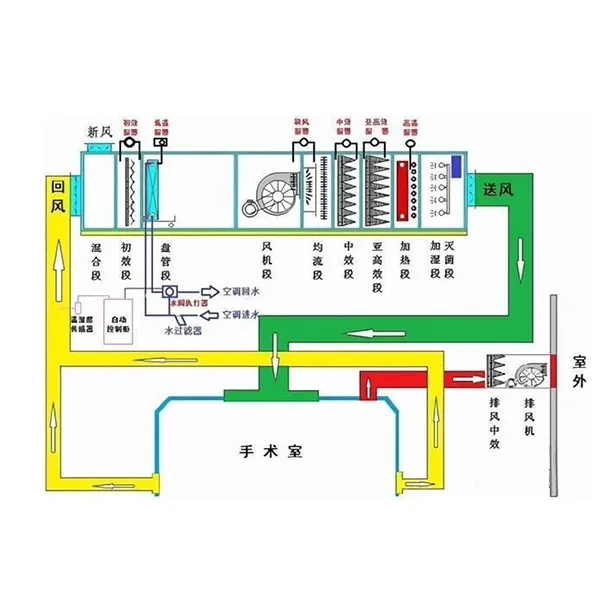
Option 1: Operating principle of a standard combined indoor air conditioning system + air filtration system + cleanroom ventilation and insulated ductwork + high efficiency HEPA air handlers + cleanroom return duct system. Constant circulation and supply of fresh air into the cleanroom production area ensures the required degree of cleanliness of the production environment.
Option 2: Operating principle in which FFU industrial air purifiers are installed on the ceiling of the cleanroom, directly supplying air to the cleanroom, combined with a column return air intake system and a ceiling air conditioner. This scheme is usually used in premises where the requirements for a clean environment are not very high, and its cost is relatively lower. Examples: food production workshops, ordinary physical and chemical laboratories, product packaging facilities, cosmetics production workshops, etc.
The choice of various designs of supply and exhaust ventilation systems is a determining factor in establishing various cleanliness classes in clean rooms.
State standards related to the construction of cleaning shops in the food industry: “Technical standards for the construction of clean rooms in the food industry GB 50687-2011”, “Norms for the design of heating, ventilation and air conditioning systems GBJ50019-2003”, “Norms for the design of clean production rooms GB50073-2001”, “Norms for the construction and acceptance of clean rooms JGJ71-90” “Quality acceptance standards for construction work on ventilation and air conditioning GB50243-2002”, “Standards for the design, construction and acceptance of refrigeration equipment GB50210-2001”, “Standards for the control of indoor environmental pollution in civil buildings GB 50325-2001” and other relevant national standards.
Source: Food Product Development and Production. When reprinting, please indicate the source.
Note: This article is for informational purposes only.