

Background information on cleanroom features and cleanliness levels in various industries
2026-03-01
Electronics industry:
The development of computer, microelectronic and information technologies has contributed to the rapid growth of the electronics industry, which in turn has led to the development of clean room technologies and placed higher demands on their design. Designing cleanrooms for the electronics industry is a complex technology, and only with a full understanding of the design features and development of rational solutions can the defect rate of products in the electronics industry be reduced and production efficiency increased.
Features of cleanrooms in the electronics industry:
A high level of cleanliness is required; air flow, temperature, humidity, pressure drop and equipment exhaust are adjusted according to needs; illumination and air flow speed in the cross-section of the clean room are controlled in accordance with the design or standards; In addition, the electrostatic discharge requirements in such cleanrooms are extremely stringent. Particularly high demands are placed on humidity. This is because static electricity is very easy to generate in an excessively dry environment, causing damage to CMOS integrated circuits. As a rule, the temperature in the premises of electronic factories should be maintained at about 22 ° C, and the relative humidity - within 50-60% (for special clean shops, appropriate temperature and humidity standards apply). Under such conditions, static electricity can be effectively eliminated and also ensure people's comfort. Chip manufacturing facilities, integrated circuit cleanrooms, and hard drive manufacturing facilities are an important part of cleanrooms in the electronics industry. Since the manufacturing and manufacturing process of electronic products places extremely strict requirements on indoor air condition and quality, the control of particles and airborne dust is emphasized, and strict standards are set regarding ambient temperature and humidity, fresh air quantity, noise, etc.
1. Noise level in Class 10,000 cleanrooms in electronics manufacturing plants (empty): shall not exceed 65 dB(A).
2. The fill factor in clean rooms with vertical flow at electronics production plants should not be less than 60%, and in clean rooms with horizontal unidirectional flow - not less than 40%; otherwise it is a local unidirectional flow.
3. The static pressure difference between the clean room of an electronics manufacturing plant and the external environment should not be less than 10 Pa, and the static pressure difference between areas with different degrees of air cleanliness and unclean areas should not be less than 5 Pa.
4. The fresh air flow rate in a Class 10,000 cleanroom in the electronics industry shall be the maximum of the following two:
(1) The amount of fresh air flow required to compensate for indoor exhaust air flow and maintain positive indoor pressure.
(2) A volume of fresh air supplying at least 40 m³ per person per hour to the clean room.
(3) Heaters for air conditioning and air purification systems in clean rooms of electronics manufacturing plants must be equipped with overheat protection and over-temperature shutdown; when spot moistening, protection against lack of water should be provided; In cold regions, supply air systems must be equipped with freeze protection. The supply air flow rate in the clean room should take the maximum value from the following three: supply air flow rate that provides the required air cleanliness class in the clean room of the electronic plant; supply air flow calculated based on heat and humidity load; volume of fresh air supplied to the clean room of an electronic factory.
Bioproduction:
Features of biopharmaceutical plants:
1. Biopharmaceutical plants are characterized not only by the high cost of equipment, the complexity of production processes and high requirements for the level of cleanliness and sterility, but also by strict requirements for the qualifications of production personnel.
2. During the production process, potential biological hazards arise, mainly related to the risk of infection, toxicity, allergenicity and other biological reactions of dead bacteria or cells, their components or metabolic products in relation to humans and other organisms, as well as the toxicity, allergenicity and other biological reactions of the product, and the impact on the environment.
Clean area:
The room (zone) in which it is necessary to control environmental pollution by dust particles and microorganisms; its architectural design, equipment and use serve the function of preventing the entry, generation and retention of pollutants in the area.
Airlock chambers:
An isolated space with two or more doors, located between two or more rooms (for example, between rooms with different levels of cleanliness). Airlocks are installed to control air flow as personnel or materials enter and exit. Airlock chambers are divided into airlock chambers for personnel and airlock chambers for materials.
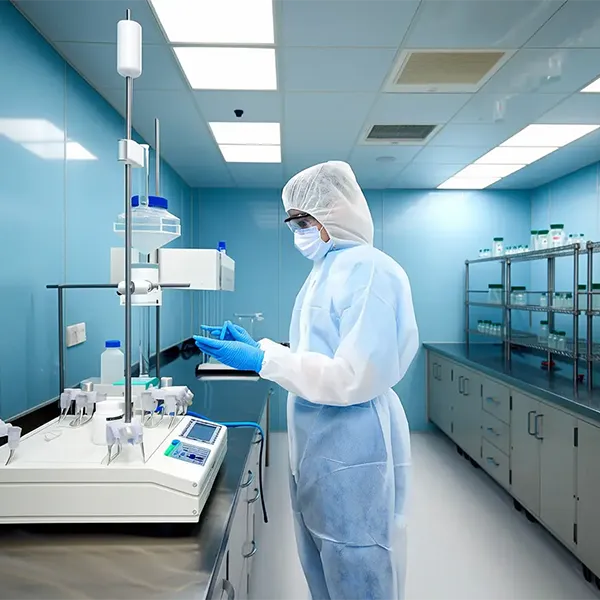
Key characteristics of cleanrooms in biopharmaceuticals: The objects of environmental control are particulate matter and microorganisms.
The cleanliness of drug manufacturing facilities is divided into four levels: local levels of 100, 1000, 10,000 and 30,000 with a general background level of 100 or 10,000.
Temperature in the clean room: if there are no special requirements - 18-26 °C, relative humidity - 45-65%.
Contamination control in biologics production cleanrooms: source control, propagation control, cross-contamination control.
The key technologies in drug manufacturing cleanrooms are mainly dust and microorganism control; As contaminants, microorganisms are a priority in the control of cleanroom environments.
Contaminants that accumulate in equipment and pipelines in clean areas of pharmaceutical production can directly contaminate drugs, but do not in any way affect the results of cleanliness control. Purity classes are not applicable to characterize the physical, chemical, radioactive and biological properties of suspended particles. Ignorance of technological processes for the production of medicinal products, lack of understanding of the causes of pollution and places of accumulation of pollutants, as well as lack of knowledge about methods for removing pollutants and criteria for their assessment.
During the technical modernization of pharmaceutical production in accordance with GMP, the following situations are widespread:
It is because of these misconceptions that purification technologies are not used effectively in the pollution control process, with the result that some pharmaceutical companies, despite investing huge amounts of money in modernization, do not achieve noticeable improvements in the quality of medicines.
Product quality is affected by factors such as the design and construction of cleanrooms, the fabrication and installation of equipment and infrastructure, the quality of raw materials, auxiliary materials and packaging materials, and ineffective implementation of personnel and material cleanliness procedures.
The reasons affecting the quality of products from the construction side are problems in the process control stage, as well as hidden risks remaining during the installation and construction process, which manifest themselves as follows:
① Uncleanliness of the internal walls of the air ducts of the purification and air conditioning system, leaky connections, excessive air leakage;
② Leakage of colored steel plate enclosing structures, improper sealing measures for clean rooms and technical interfloor space (ceiling), leakage of sealed doors;
③ Decorative profiles and process pipelines create “dead zones” in the clean room in which dust accumulates;
④ In some places, the construction does not meet the design requirements, which makes it impossible to comply with the relevant regulatory requirements;
⑤ The sealant used does not meet the quality requirements and is easy to peel off and deteriorate;
⑥ The supply and exhaust air ducts, made of colored steel plate, are connected to each other, causing dust to flow from the exhaust duct to the supply air duct;
⑦ when welding stainless steel sanitary pipelines for process purified water, water for injection, etc., internal seams are not formed;
⑧ Air duct check valves are faulty, reverse air flow leads to pollution;
⑨ poor-quality installation of the drainage system; dust easily accumulates on pipe supports and fittings;
⑩ Incorrect pressure differential settings in the clean room, inconsistent with the requirements of the production process.
Printing and packaging industry:
As society develops, the quality of the printing and packaging industry's products also improves. Large-sized printing equipment has begun to be installed in clean rooms, which can significantly improve the quality of printed products and significantly increase their level of compliance with standards. This is the best example of the integration of the clean room industry and the printing industry. In printing, the most important role is played by the temperature and humidity in the room, as well as the amount of small particles in the air, which directly affects the quality of the product and the proportion of suitable products. In the packaging industry, the main requirements relate to indoor temperature and humidity, the amount of fine particles in the air and water quality, especially in the field of food and pharmaceutical packaging. Of course, standardized operating procedures for production personnel also play an equally important role.
Dust-free spraying is carried out in a separate closed production workshop, built from steel sandwich panels, which allows you to effectively filter product contamination from unfavorable air conditions, reduce the amount of dust in the spraying area and the percentage of product defects. The application of dust-free coating technology further improves the appearance quality of products such as TV/computer cases, mobile phones, DVD/VCD players, game consoles, VCRs, PDAs, cameras, audio equipment, hair dryers, MD players, cosmetic bags, toys, etc. Process: loading area → manual dust cleaning → electrostatic dust cleaning → manual/automatic coating → drying zone → UV curing zone → cooling zone → screen printing zone → quality control zone → receiving zone.
To demonstrate satisfactory operation of a food packaging cleanroom, it must be demonstrated that it meets the following requirements:
1. The supply air flow rate in a food packaging clean room must be sufficient to dilute or eliminate contaminants generated in the room.
2. The air in a food packaging cleanroom should be circulated from the clean area to areas of lower cleanliness, with the movement of contaminated air being kept to a minimum and the direction of air flow at the entrance and inside the room should be correct.
3. Introducing air into a food packaging cleanroom does not significantly increase indoor contamination.
4. The dynamics of air movement in a clean room for food packaging should ensure that there are no areas with high concentrations of contaminants.
If the cleanroom meets the above requirements, particle or microbial concentration measurements (if necessary) can be performed to confirm compliance with established cleanliness standards.
Testing cleanrooms for food packaging:
1. Supply and exhaust air flow: If we are talking about a clean room with turbulent flow, it is necessary to measure the supply and exhaust air flow. If it is a clean room with unidirectional flow, it is necessary to measure the air flow velocity.
2. Control of air flows between zones: to confirm the correct direction of air flow between zones, that is, from an area with a higher level of cleanliness to an area with a lower level of cleanliness, it is necessary to check:
(1) correct pressure differential between zones;
(2) the correct direction of air flow in openings near doors, walls, floors, etc., that is, from an area with a higher level of cleanliness to an area with a lower level of cleanliness.
3. Checking the tightness of filters: High efficiency filters and their frames should be checked to ensure that suspended contaminants do not enter the room through:
(1) damaged filters;
(2) clearances between the filter and its frame;
(3) other parts of the filter device.
4. Insulation Leak Test: This test is carried out to ensure that suspended contaminants do not enter the clean room through building materials.
5. Room Air Flow Control: The type of air flow control test depends on whether the clean room air flow is turbulent or unidirectional. If the air flow in the cleanroom is turbulent, you need to ensure that there are no areas in the room with insufficient air circulation. If it is a unidirectional flow cleanroom, you need to ensure that the airflow speed and direction throughout the room meets design requirements.
6. Concentration of suspended particles and microorganisms: If the above tests satisfy the requirements, finally measurements of the concentration of particles and microorganisms (if necessary) are carried out to confirm their compliance with the specifications of the clean room design.
7. Other tests: In addition to the above pollution control tests, it is sometimes necessary to carry out one or more of the following tests: temperature; relative humidity; power of the heating and cooling system of the room; noise level; illumination; vibration level.
Clean rooms for packaging of medicines:
1. Requirements for environmental control:
(1) The level of air purification required for production must be ensured. The number of particulates and living microorganisms in the air of packaging cleanrooms should be regularly checked and recorded; The static pressure difference between cleanrooms for packaging of different classes must be maintained within specified values.
(2) The temperature and relative humidity in packaging cleanrooms must be consistent with the requirements of the manufacturing process.
(3) In production areas of drugs of the penicillin group, highly allergenic and antitumor drugs, autonomous air conditioning systems must be installed, and the exhaust air must be purified.
(4) In areas where dust is generated, effective dust collection devices must be installed to prevent dust cross-contamination.
(5) In auxiliary production areas such as warehouses, ventilation systems, as well as temperature and humidity must meet the requirements for the production and packaging of medicinal products.
2. Cleanliness zones and frequency of air exchange: In cleanrooms, it is necessary to strictly control the cleanliness of the air, as well as parameters such as temperature, humidity, amount of fresh air and pressure drop.
(1) Cleanliness levels and air exchange rates in drug production and packaging areas. In air purification projects in drug production and packaging workshops, air cleanliness is divided into 4 levels: 100, 10,000, 100,000 and 300,000. To determine the air exchange rate in a clean room, it is necessary to compare all air flow rates and take the maximum value. In practice, the air exchange rate for class 100 is 300–400 times/hour, for class 10,000—25–35 times/hour, for class 100,000—15–20 times/hour.
(2) Cleanliness zones in drug packaging facility cleaning projects. The specific division of the production and packaging environment for medicines into cleanliness zones is carried out in accordance with national cleanliness standards.
(3) Determination of other environmental parameters in packaging plant cleaning projects.
(4) Temperature and humidity in a packaging workshop cleaning project. The temperature and relative humidity in the clean room must be appropriate for the drug manufacturing process.
Temperature: for classes 100 and 10,000 - 20-23 °C (summer), for classes 100,000 and 300,000 - 24-26 °C, for the general area - 26-27 °C. Classes 100 and 10,000 are for sterile environments. Relative humidity: for medicines that easily absorb moisture, 45–50% (in summer); for tablets and other solid dosage forms - 50–55%; for aqueous solutions for injections and oral solutions - 55–65%.
(5) Clean room pressure. To keep the room clean, positive pressure must be maintained. In cleanrooms where dust is generated, harmful substances are released, or highly allergenic drugs such as penicillin are produced, it is necessary to prevent the entry of external contaminants or maintain relative negative pressure between zones. В помещениях с разными классами чистоты необходимо обеспечить приток воздуха из помещений с более высоким классом чистоты и отток воздуха из внутренних помещений. Внутри помещения необходимо поддерживать положительное давление с перепадом по отношению к соседним помещениям более 5 Па, а перепад давления между чистым помещением и внешней атмосферой должен быть более 10 Па.
Пищевая промышленность:
Еда — это основа жизни, а болезни приходят через рот, поэтому безопасность и гигиена в пищевой промышленности занимают важное место в нашей повседневной жизни. Обеспечение безопасности и гигиены пищевых продуктов в основном зависит от контроля в трёх аспектах: во-первых, от соблюдения производственным персоналом стандартов работы; во-вторых, от предотвращения загрязнения извне (необходимо создать рабочее пространство с относительно высокой степенью чистоты); в-третьих, от исключения проблемных сырьевых материалов на этапе закупки.
Площадь цеха по производству пищевых продуктов должна соответствовать объемам производства, планировка должна быть рациональной, а дренаж — бесперебойным; пол цеха должен быть выполнен из нескользящего, прочного, водонепроницаемого и коррозионно-стойкого материала, быть ровным, без скоплений воды и поддерживаться в чистоте; на выходах из цеха и в местах, соединяющих его с внешней средой (дренаж, вентиляция), должны быть установлены устройства для защиты от грызунов, мух и насекомых. Внутренние стены, потолок, окна и двери цеха должны быть выполнены из нетоксичных, светлых, водонепроницаемых, устойчивых к плесени, неотслаивающихся и легко очищаемых материалов. Углы стен, пола и потолка должны быть закруглены (радиус кривизны не менее 3 см). Рабочие столы, конвейерные ленты, транспортные тележки и инструменты в цехе должны быть изготовлены из нетоксичных, коррозионно-стойких, нержавеющих, легко очищаемых и дезинфицируемых прочных материалов. В подходящих местах должно быть установлено достаточное количество оборудования или принадлежностей для мытья рук, дезинфекции и сушки рук; краны должны иметь неручное управление. В зависимости от потребностей производства у входа в цех должны быть установлены средства для дезинфекции обуви, сапог и колес. Должна быть оборудована раздевалка, соединенная с цехом. В зависимости от потребностей производства также должны быть оборудованы туалеты и душевые, соединенные с цехом.
Оптоэлектроника:
Чистые помещения для производства оптоэлектронной и оптической продукции обычно используются в таких отраслях, как производство электронных приборов и измерительных приборов, компьютеров, полупроводников, автомобилестроение, аэрокосмическая промышленность, фотолитография и производство микросхем. Помимо чистоты воздуха, необходимо также обеспечить соответствие требованиям по устранению статического электричества. Ниже на примере одной из наиболее типичных современных отраслей — производства светодиодов — будет представлено описание чистых помещений в оптоэлектронной и оптической промышленности.
Анализ примеров монтажа и строительства чистых цехов для светодиодной промышленности: в данном проекте речь идет об установке чистых цехов для конечных технологических процессов, степень очистки которых обычно соответствует классу 1000, 10 000 или 100 000. Установка чистых цехов для производства экранов с подсветкой в основном касается чистых цехов для штамповки и сборки таких изделий, степень очистки которых обычно соответствует классу 10 000 или 100 000.
Требования к параметрам воздуха в помещении при установке светодиодного оборудования в чистой комнате:
1. Требования к температуре и влажности: температура обычно составляет 24±2 °C, относительная влажность — 55±5 %.
2. Расход свежего воздуха: поскольку в таких очищенных чистых помещениях находится достаточно много людей, следует выбирать максимальное значение из следующих: 10–30 % от общего расхода приточного воздуха в чистом помещении без однонаправленного потока; объем свежего воздуха, необходимый для компенсации вытяжки и поддержания положительного давления в помещении; обеспечение расхода свежего воздуха на человека в час ≥ 40 м³/ч.
3. Большой расход приточного воздуха. Для обеспечения чистоты и тепло-влажностного баланса в чистом помещении требуется большой расход приточного воздуха. Для помещения площадью 300 м² с высотой потолка 2,5 м, если это чистое помещение класса 10 000, расход приточного воздуха должен составлять 300 × 2,5 × 30 = 22 500 м³/ч (частота воздухообмена ≥ 25 раз/ч) ; если это чистая безпыльная цех класса 100 000, расход приточного воздуха должен составлять 300*2,5*20=15 000 м³/ч (частота воздухообмена ≥15 раз/ч).
Здравоохранение:
Технология очистки воздуха также известна как технология чистых помещений. Помимо соблюдения стандартных требований к температуре и влажности в кондиционированных помещениях, благодаря различным инженерным системам и строгому контролю содержание микрочастиц, воздушные потоки, давление и другие параметры в помещении поддерживаются в определённых пределах; такие помещения называются чистыми помещениями. Чистые помещения строятся и используются в больницах. С развитием здравоохранения и высоких технологий технологии очистки находят все более широкое применение в медицинской среде, а требования к ним становятся все более высокими. Чистые помещения, применяемые в медицине, в основном делятся на три категории: чистые операционные, чистые палаты и чистые лаборатории.
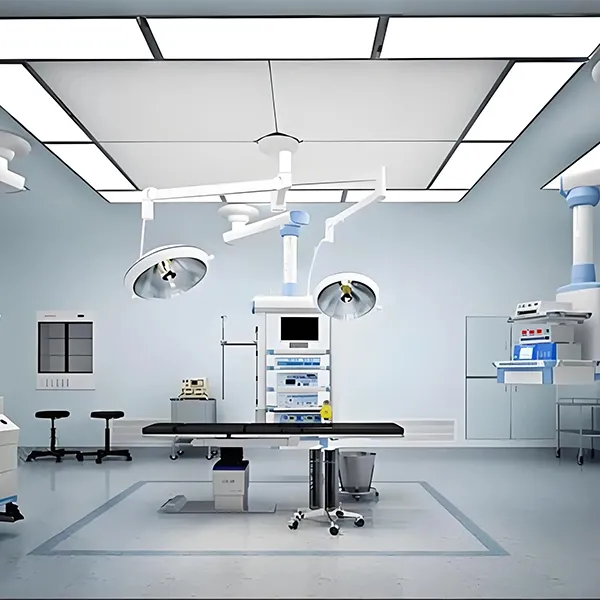
Чистые операционные:
Чистые операционные предназначены для контроля микробиологической обстановки в помещении; эксплуатационные параметры и показатели классификации, а также чистота воздуха являются необходимыми условиями для обеспечения этого. Чистые операционные подразделяются на следующие классы в зависимости от степени чистоты:
1. Особо чистая операционная: степень чистоты в операционной зоне составляет 100 класс, в прилегающих зонах — 1000 класс. Подходит для стерильных операций, таких как лечение ожогов, эндопротезирование суставов, трансплантация органов, нейрохирургия, офтальмология, пластическая хирургия и кардиохирургия.
2. Чистая операционная: степень чистоты в операционной зоне составляет 1000 класс, в прилегающих зонах — 10 000 класс. Подходит для стерильных операций в области торакальной хирургии, пластической хирургии, урологии, гепатобилиарной хирургии, ортопедии, а также для процедур по извлечению яйцеклеток.
3. Операционные общего назначения: степень чистоты операционной зоны — 10 000, прилегающих зон — 100 000. Подходят для операций в области общей хирургии, дерматологии и абдоминальной хирургии.
4. Semi-clean operating rooms: air purity level - 100,000. Suitable for operations in the field of obstetrics and proctology.
Помимо того, что помещения отделения чистых операционных должны соответствовать соответствующему уровню чистоты и концентрации бактерий, их технические параметры также должны соответствовать соответствующим нормам (см. таблицу основных технических параметров помещений отделения чистых операционных различных уровней). В соответствии с общими требованиями планировка отделения чистых операционных должна быть разделена на две части: чистую зону и нечистую зону.
Операционные и функциональные помещения, непосредственно обслуживающие операционные, должны располагаться в чистой зоне. При перемещении людей и предметов между зонами различной степени чистоты в операционном отделении должны быть предусмотрены воздушные шлюзы, буферные комнаты или передаточные окна.
Обычно операционные комнаты располагаются в центральной части. Внутренняя планировка и форма проходов должны соответствовать принципам функциональной схемы и четкого разделения чистых и загрязненных зон.
Несколько типов палат интенсивной терапии в больнице:
Палаты интенсивной терапии подразделяются на изоляционные палаты и палаты интенсивной терапии. Изоляционные палаты делятся на четыре уровня в зависимости от биологической опасности: P1, P2, P3 и P4. Палаты P1 практически не отличаются от обычных палат, и вход посторонних лиц в них не ограничивается; палаты P2 имеют более строгие требования, чем палаты P1, и, как правило, вход посторонних лиц в них запрещен; палаты P3 изолированы от внешней среды с помощью двойных дверей или буферных помещений, внутри палат поддерживается отрицательное давление; палаты P4 имеют изолированную зону, отделенную от внешней среды, внутри палат поддерживается постоянное отрицательное давление 30 Па, медицинский персонал носит защитную одежду для предотвращения инфицирования. Палаты интенсивной терапии включают в себя отделения интенсивной терапии (ICU), отделения интенсивной кардиологической терапии (CCU), отделения интенсивной терапии новорожденных (NICU) и отделения для лечения лейкоза и т. д. В палатах для больных лейкозом температура воздуха составляет 24–22 °C, скорость воздушного потока — 0,15–0,3 м/с, относительная влажность — не более 60 %, степень чистоты — 100 класс; при этом наиболее чистый приточный воздух должен поступать в первую очередь к голове пациента, а зона дыхания (рот и нос) должна находиться со стороны притока воздуха, для чего лучше использовать горизонтальный поток. Исследования концентрации микроорганизмов в палатах для пациентов с ожогами показывают, что использование вертикального ламинарного потока имеет явные преимущества при открытом лечении: скорость потока 0,2 м/с, температура 28–34 °C, степень чистоты — 1000. Палаты для пациентов с заболеваниями органов дыхания редко встречаются в стране; к температуре и влажности в таких палатах предъявляются довольно строгие требования: температура должна поддерживаться в диапазоне 23–30 °C, относительная влажность — 40–60 %; в каждой палате эти параметры могут регулироваться с учетом индивидуальных потребностей пациентов; степень чистоты должна поддерживаться на уровне от 10 до 10 000; уровень шума должен быть ниже 45 дБ(A); персонал, входящий в палату, должен пройти процедуры дезинфекции, включая переодевание и обдув; в палате поддерживается положительное давление.
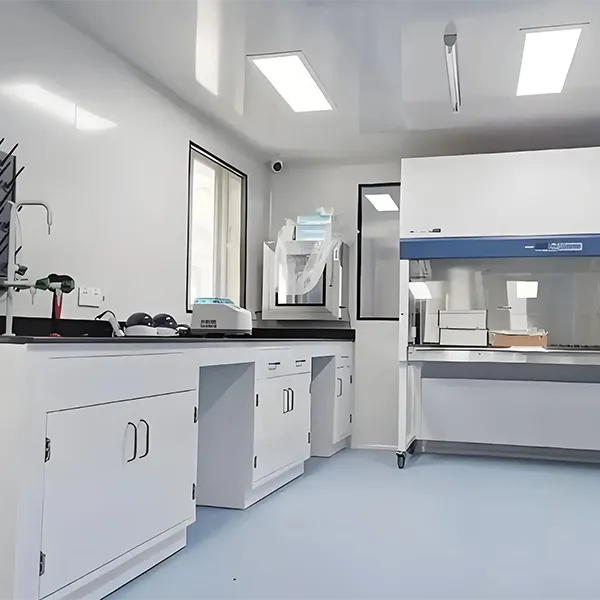
Чистые лаборатории:
Clean laboratories are divided into conventional clean laboratories and biosafety laboratories. Experiments carried out in regular clean laboratories are not infectious, but it is required that the environment does not adversely affect the experiment itself; поэтому в таких лабораториях не предусмотрены средства защиты, а степень чистоты должна соответствовать требованиям эксперимента.
Лаборатории биологической безопасности оснащены средствами защиты первого уровня и позволяют проводить биологические эксперименты с обеспечением защиты второго уровня. Биологически безопасные лаборатории необходимы для проведения научных экспериментов в таких областях, как микробиология, биомедицина, функциональные исследования и генная рекомбинация. Основной принцип биологически безопасных лабораторий — безопасность. В зависимости от степени биологической опасности они подразделяются на четыре уровня: P1, P2, P3 и P4.
Лаборатории уровня P1 подходят для работы с хорошо изученными патогенами, которые редко вызывают заболевания у здоровых взрослых и представляют небольшую опасность для персонала и окружающей среды. Во время экспериментов двери должны быть закрыты, а работа проводиться в соответствии с процедурами для обычных микробиологических экспериментов;
Лаборатории уровня P2 предназначены для работы с патогенами, представляющими среднюю потенциальную опасность для человека и окружающей среды. Доступ в экспериментальную зону ограничен; эксперименты, при которых возможно образование аэрозолей, должны проводиться в биологических шкафах II уровня, при этом в лаборатории должен иметься автоклав;
Лаборатории уровня P3 используются в клинических, диагностических, учебных или производственных учреждениях для работы с эндогенными и экзогенными патогенами, воздействие которых при вдыхании может вызвать тяжелые, потенциально смертельные заболевания. Лаборатория оборудована двойными дверями или шлюзовой камерой и изолированной от внешней среды экспериментальной зоной; вход посторонним лицам запрещен; в лаборатории поддерживается постоянное отрицательное давление;эксперименты проводятся в биологических шкафах II уровня, а воздух из помещения после фильтрации с помощью высокоэффективных фильтров выводится наружу;Лаборатории уровня P4 предъявляются более строгие требования, чем к лабораториям уровня P3. Некоторые опасные экзогенные патогены представляют высокий индивидуальный риск заражения в лаборатории и развития опасных для жизни заболеваний в результате передачи через аэрозоль; соответствующие работы должны проводиться в лабораториях уровня P4. Используется конструкция с изолированной зоной внутри отдельного здания и внешней перегородкой; в помещении поддерживается отрицательное давление; для проведения экспериментов используются биологические шкафы III уровня; устанавливаются устройства воздушной изоляции и душевые; обслуживающий персонал должен носить защитную одежду; лицам, не являющимся сотрудниками данного учреждения, вход запрещен. Основой проектирования лабораторий биологической безопасности является динамическая изоляция; особое внимание уделяется мерам по вытяжке воздуха, дезинфекции на месте, разделению чистых и загрязненных зон, предотвращению непреднамеренного распространения и обеспечению надлежащего уровня чистоты.